
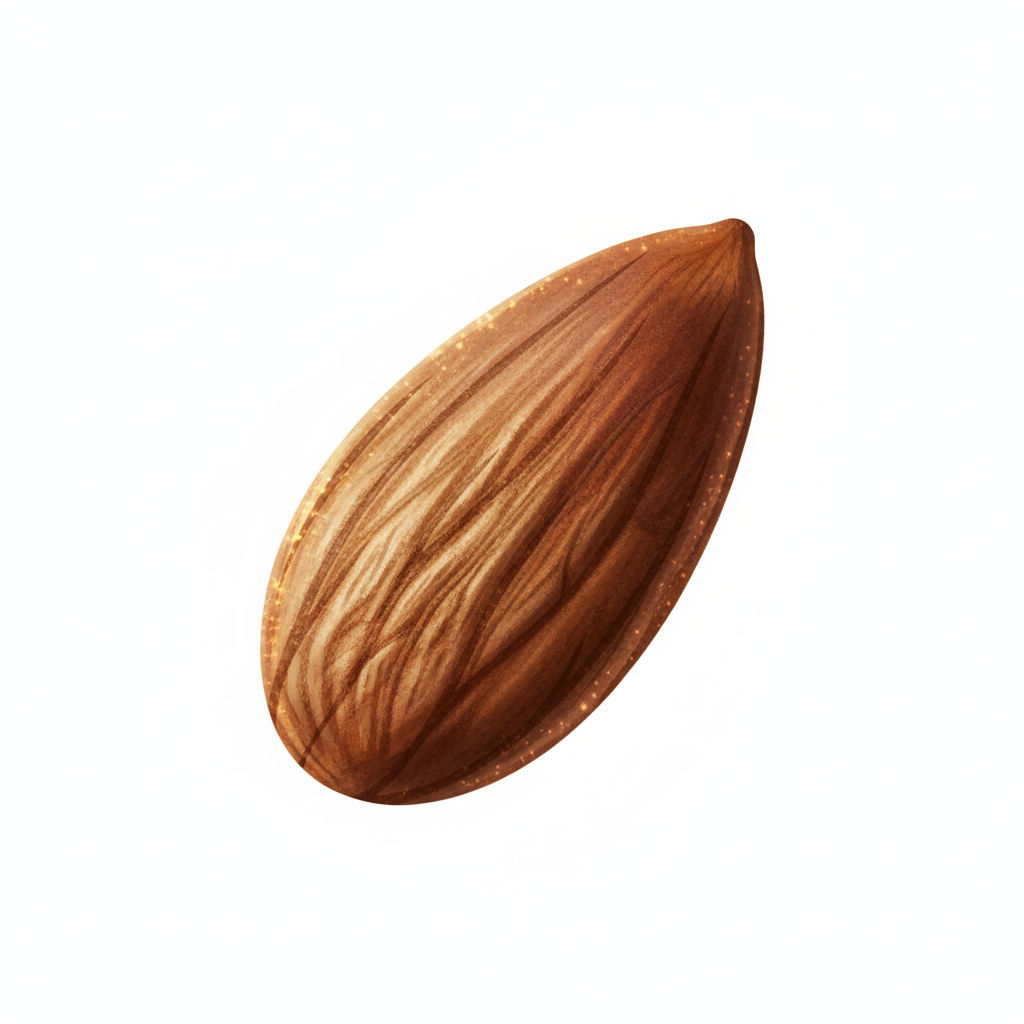

What is Sweet Almond Oil?
Pressed from the kernels of Prunus dulcis, sweet almond oil is a light, fast-absorbing emollient rich in oleic and linoleic acids plus natural tocopherols (vitamin E). Cosmetic safety reviewers confirm it’s widely used and safe as used in leave-on skincare.CIR Safety
Key Skin Benefits (backed by research)
1) Deep, non-heavy moisturising
As an emollient triglyceride oil, sweet almond oil softens the stratum corneum and helps reduce transepidermal water loss (TEWL) when used in moisturisers, improving smoothness and comfort for dry, sensitive skin. Reviews of plant oils and a dedicated 2022 update on sweet almond oil support its role in barrier support and hydration.PMCWiley Online Library
2) Supports a healthy skin barrier
Dermatology literature notes that plant oils rich in linoleic acid (like almond oil) help normalise barrier function and water loss; clinical moisturiser studies show hydration increases over weeks of use. (Mechanism evidence + moisturiser outcomes.)PMCMD Edge
3) Gentle care for infant skin (when appropriate)
Systematic reviews and clinical reports on topical oils in neonates describe improvements in skin condition and barrier function; hospital practice has included almond oil alongside other oils for preterm infant skin hydration and diaper-area care (always patch-tested and supervised).PubMedLippincott JournalsPMC
4) Antioxidant & soothing profile
Like many botanical oils, sweet almond oil contains tocopherols and other minor components that contribute to antioxidant and anti-inflammatory effects described in reviews of topical plant oils.PMC+1
Composition at a Glance (why it feels great)
Across cultivars, almond oil is predominantly oleic acid (~62–76%) with substantial linoleic acid (~14–30%)—a balance that gives slip without heaviness and supports barrier lipids.PMC+1
Safety & Tolerability (including nut-allergy context)
- Cosmetic safety: The Cosmetic Ingredient Review (CIR) reports low irritation/sensitisation in clinical testing and concludes sweet almond oil is safe as used in cosmetics.CIR Safety
- Nut-allergy nuance: Allergists note highly refined nut oils are unlikely to contain enough protein to trigger reactions, while cold-pressed/unrefined oils may contain traces—so people with nut allergy should patch-test and seek clinician advice. Patient organisations echo this conservative approach.AAAAIAllergy & Asthma NetworkRoyal Children's Hospital
Natural Nine positioning: We use cosmetic-grade sweet almond oil and recommend a simple patch test for anyone with known nut allergies or highly reactive skin.
How Sweet Almond Oil works in Natural Nine
In Natural Nine, Prunus Amygdalus Dulcis Oil provides the lightweight slip and silky after-feel that helps our balm glide on and absorb comfortably. It partners with shea butter and beeswax to soften and reduce water loss, while playing nicely with zinc oxide for delicate, easily irritated skin — keeping our formula newborn-gentle and simple.PMC
FAQs
Question
Is sweet almond oil safe for newborns?
Answer
Question
Will it clog pores?
Answer
Question
Refined vs unrefined — which is better?
Answer
References
CIR. Safety Assessment of Prunus Amygdalus Dulcis (Sweet Almond) Oil — cosmetic use & safety; composition overview.<a href="https
//www.cir-safety.org/sites/default/files/RR_Sweet%20Almond.pdf?utm_source=chatgpt.com">CIR SafetyBlaak J. An updated review on efficacy and benefits of sweet almond… (2022) — TEWL/barrier and cosmetic uses.<a href="https
//onlinelibrary.wiley.com/doi/10.1111/ics.12758?utm_source=chatgpt.com">Wiley Online LibraryLin TK et al. Anti-Inflammatory and Skin Barrier Repair Effects of Topical Application of Some Plant Oils (2017) — mechanism and barrier support.<a href="https
//pmc.ncbi.nlm.nih.gov/articles/PMC5796020/?utm_source=chatgpt.com">PMCAksucu G et al. Effects of Topical Oils on Neonatal Skin
Systematic Review (2022) — neonatal skin outcomes.PubMedPreterm care
The Effect of Sunflower Seed and Almond Oil on Preterm Neonates’ Skin… (2020) — clinical practice context for hydration/diaper care.Lippincott JournalsComposition range across cultivars
Özcan MM et al. (2020); Melhaoui R et al. (2021).PMC+1Allergy guidance
AAAAI Ask-the-Expert (refined vs unrefined oils); Allergy & Asthma Network; RCH (Melbourne) child-health guidance.AAAAIAllergy & Asthma NetworkRoyal Children's Hospital