
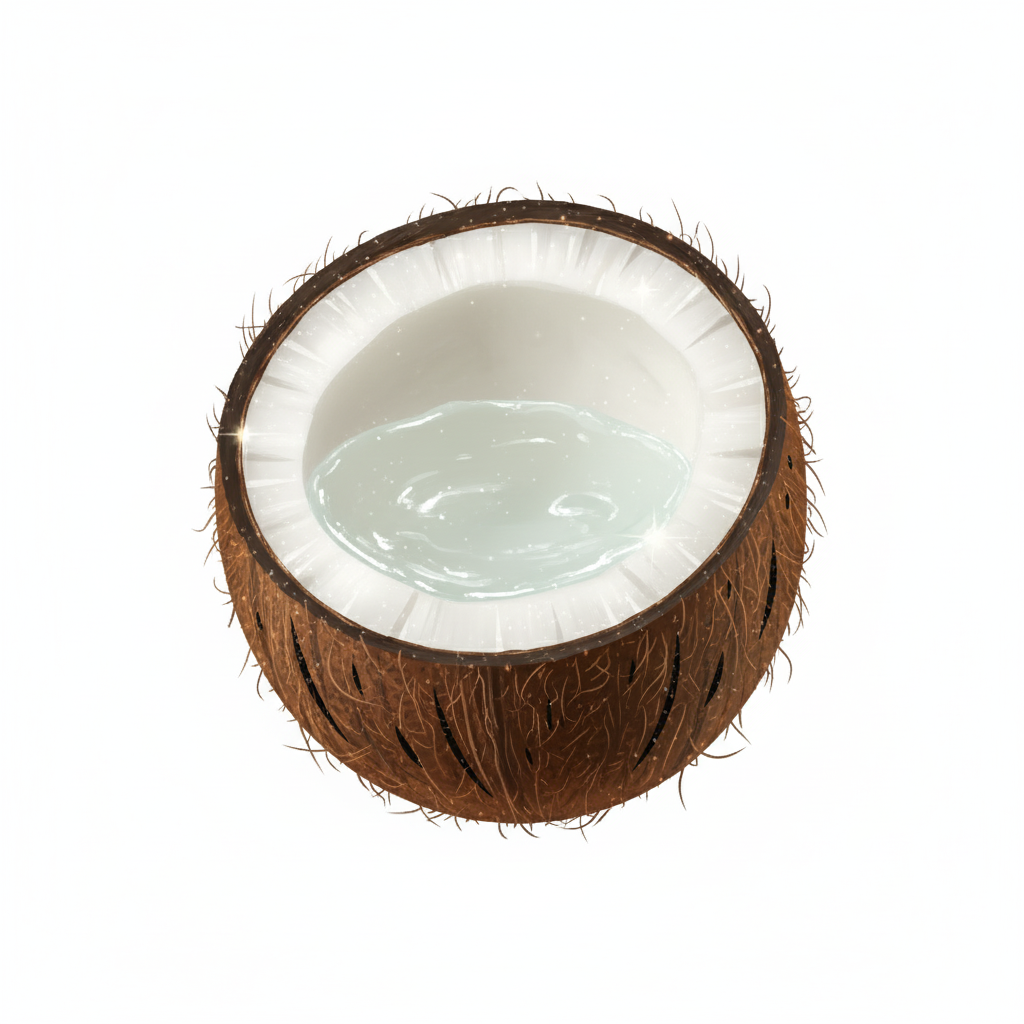

What is Cocos Nucifera Oil?
Cocos Nucifera Oil (coconut oil) is a natural triglyceride oil pressed from coconut flesh. It’s rich in medium-chain fatty acids—especially lauric acid—which underpin its moisturising and protective skin feel. INCI: Cocos Nucifera Oil.PMC+1
Key Skin Benefits (science-backed)
1) Proven moisturiser & barrier support
In adults with xerosis, a randomised, double-blind trial found virgin coconut oil was as effective as mineral oil for improving hydration and clinical dryness, with good tolerability. In children with mild–moderate atopic dermatitis, an 8-week RCT showed coconut oil produced greater reductions in SCORAD and bigger improvements in TEWL and capacitance than mineral oil—evidence of barrier support.PubMed+1Wiley Online Library
2) Helps keep problem microbes in check
In adults with atopic dermatitis colonised by Staphylococcus aureus, a clinical study reported marked reductions in S. aureus after 4 weeks of virgin coconut oil, alongside improved eczema severity—supporting a gentle antimicrobial contribution in barrier care. Mechanistically, lauric-acid–derived monolaurin is implicated.PubMedLiebert Publishing
3) Calms irritation (anti-inflammatory signals)
In vitro work with reconstructed human epidermis found virgin coconut oil suppressed inflammatory markers (e.g., TNF-α, IL-6) and showed non-irritant, non-phototoxic profiles, aligning with its soothing feel in leave-on products.PMCPubMed
4) Infant-care context (preterm/newborn massage)
Clinical literature on topical emollient oils in preterm infants—including coconut oil trials—shows improved skin condition and lower infection risk versus no oil, with no significant safety concerns reported in these settings. Individual RCTs also track benefits like weight gain and better skin maturity. (Use sparingly; avoid aerosols/powders around babies.)PMCPubMedScienceDirect
Reality check on pores: Coconut oil can feel rich for some skin types; your balanced blend (with lighter oils, wax esters, and starch) helps keep the after-feel comfortable.
How Coconut Oil Works in Natural Nine
In Natural Nine, cosmetic-grade Cocos Nucifera Oil brings soft, cushiony emollience and supports the barrier, while Cera Alba forms a breathable shield, shea and almond add rich yet silky moisture, jojoba mimics sebum for quick comfort, zinc oxide soothes, and arrowroot trims greasiness—creating a newborn-gentle finish that absorbs beautifully.
FAQs
Question
Is coconut oil safe for newborns?
Question
Refined or unrefined—what do you use?
Answer
Question
Does coconut oil kill bacteria?
Answer
References
Agero ALC, Verallo-Rowell VM. Virgin coconut oil vs mineral oil for xerosis — RCT; moisturising efficacy and safety.<a href="https
//pubmed.ncbi.nlm.nih.gov/15724344/?utm_source=chatgpt.com">PubMedEvangelista MTP et al., 2014. Pediatric AD RCT
Verallo-Rowell VM et al., 2008. Adult AD
coconut oil improved S. aureus colonisation and eczema severity vs olive oil.PubMedLiebert PublishingVarma SR et al., 2018. In-vitro
Getaneh FB et al., 2024 meta-analysis. Topical emollient oils in preterm infants
reduced infection risk; better skin outcomes. RCTs include coconut oil.PMCKonar MC et al., 2020. Preterm trial
coconut oil application tracked with better skin maturity and clinical outcomes.PubMedComposition context
Medium-chain–rich, lauric-acid-dominant oil profile.PMC